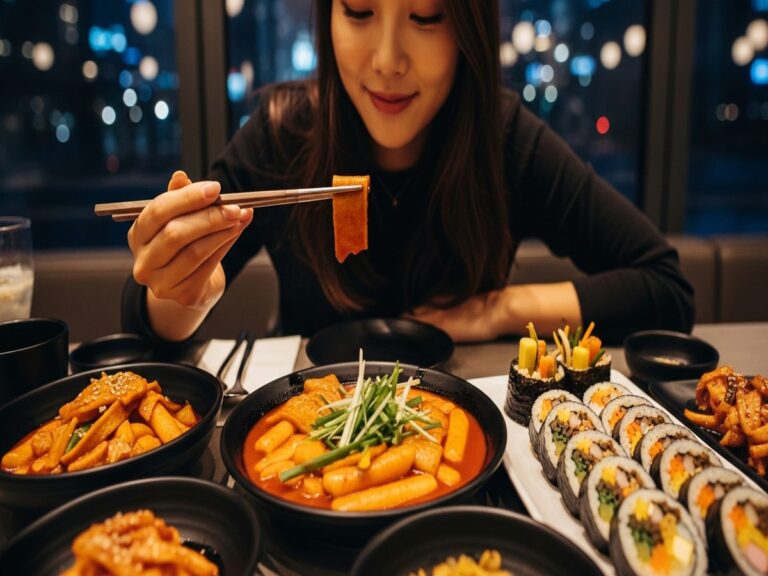

Seventy-five million passengers passed through Incheon International Airport in 2022, each one stepping onto Korean soil, or at least its highly polished, temperature-controlled equivalent. For many, that initial breath of recycled air wasn’t just about arrival; it was a sensory precursor, a subtle, almost imperceptible shift in the atmosphere that heralded a different kind of journey. Even before you clear customs, before you truly hit the bustling streets of Seoul, the unmistakable aroma of Korean cuisine wraps around you. It’s a foundational note, a promise of the vibrant, sometimes confronting, always delicious world waiting just beyond the gate. I swear, sometimes the smell of sizzling bulgogi or the sharp tang of kimchi permeates the air right there in Terminal 2, a culinary siren song that sets the stage.
I’ve landed at Incheon more times than I can count, and honestly, the airport itself feels like a microcosm of Seoul’s sprawling, diverse food scene. You can grab a lightning-fast kimbap for a quick bite, a perfectly rolled cylinder of rice and fillings that’s far superior to any sad airplane sandwich, or you can sit down for an elaborate beef barbecue meal, complete with all the banchan, if you’ve got the time and the appetite. It isn’t just a transit point; it’s a tantalizing preview, a warm-up act for your taste buds. Starting your Korean food adventure right here isn’t a bad idea at all. It’s a teaser, a little hint of the flavor bombs to come, preparing your palate with a gentle, or sometimes not-so-gentle, nudge.
Your First Bite: The Airport’s Culinary Embrace
Stepping off a long-haul flight, disoriented and perhaps a little jet-lagged, the last thing you expect is a genuine culinary experience. But Incheon, in its glorious efficiency and dedication to passenger comfort, delivers. You don’t get bland, generic airport food here; you get Korean airport food. Think about it: hundreds of restaurants, cafes, and snack bars, all vying for your attention. I remember one particularly brutal red-eye from Europe, craving something hot and comforting. I found a tiny spot tucked away near Concourse A, serving a bubbling bowl of sundubu jjigae. The steam rose, carrying the scent of spicy tofu and seafood, and with the first spoonful, the fatigue just melted away. That’s the power of Korean food, even in an airport.
The sheer variety is staggering, truly. There are dedicated food halls offering everything from classic bibimbap to modern fusion takes on traditional dishes. You’ll spot families sharing platters of crispy fried chicken, business travelers hunched over bowls of hearty galbitang, and solo adventurers like myself discovering a new favorite noodle dish. It’s a bustling hub, a culinary ecosystem that operates 24/7, catering to the millions who pass through its gates. And what a strategic move it is, really, to introduce visitors to the country’s gastronomic prowess the moment they arrive. It sets an expectation, a high bar, for what awaits them in the city proper.
I’ve actually made it a point, on several occasions, to arrive at the airport early just to explore its dining options. There’s a particular branch of a famous Korean BBQ chain – I won’t name names, but if you know, you know – that serves surprisingly good quality meats, even for an airport outpost. The charcoal grill, the smoky aroma, the perfectly crisp lettuce wraps… it’s a full experience. You’re seated amidst fellow travelers, yes, but also Koreans embarking on their own journeys, reinforcing the authenticity. It’s a reminder that good food isn’t confined to specific districts in Seoul; it permeates every corner, even the transit zones.
What I appreciate most about Incheon’s food scene, beyond the convenience, is its commitment to quality. You won’t find sad, wilting kimchi here. The banchan are fresh, the ingredients are clearly cared for, and the flavors are robust. It’s a genuine welcome, a taste of home for Koreans returning, and an exciting introduction for those just beginning their exploration. So, next time you land, don’t rush out. Take a moment. Breathe in the aromas. Let your first bite be a deliberate one, because it’s already part of the adventure. It’s not just a stopover; it’s the prologue to your Korean culinary story.
Kimchi: The Fiery Soul of Korea
When you talk about Korean food, you talk about kimchi. There’s no escaping it, nor should there be. In 2022, a festival dedicated to this fermented marvel drew a staggering two million visitors, which, if you ask me, says more about its cultural significance than any government tourism campaign ever could. Whether you’re a die-hard fan who carries a small container of it everywhere (guilty as charged, sometimes) or a first-timer tentatively poking at a scarlet-hued piece of cabbage, you simply can’t ignore its omnipresence. Think of it not just as a side dish, but as the spicy, tangy, utterly essential heart of Korean dining, beating with every meal.
Made primarily from fermented Napa cabbage, though countless other variations exist, kimchi is a flavor bomb. It’s got that immediate hit of gochugaru chili, the pungent depth of garlic and ginger, and a complex sourness that develops over weeks, sometimes months, of careful fermentation. But it’s more than just taste; it’s a powerhouse of nutrition. Loaded with probiotics, vitamin C, and dietary fiber, it’s basically a superfood that happens to be delicious. I’ve tried to make it at home, mind you, in my tiny Seoul apartment kitchen, armed with YouTube tutorials and a misplaced sense of culinary confidence. Let’s just say it didn’t quite hit the mark. The balance of those core ingredients – garlic, ginger, gochugaru – isn’t just a recipe; it’s an art form, a generational wisdom passed down, requiring decades of practice to perfect.
What most people miss is that every household in Korea has its own unique version, its own secret blend, its own preferred fermentation time. It’s a culinary fingerprint. The kimchi you taste at a bustling restaurant in Myeongdong might be markedly different from the one served in a quiet family home in Busan, yet both are authentically, beautifully kimchi. I remember visiting a friend’s grandmother in an old hanok house in Bukchon, and her kimchi was sweeter, less aggressively spicy, with a deeper, almost earthy undertone that I hadn’t encountered before. It was a revelation, a testament to the idea that there’s no single “right” kimchi. It’s a living, evolving dish, shaped by region, family history, and even personal preference.
Every time I taste kimchi, I find something new. Maybe it’s a deeper sourness from a longer ferment, or a hint of sweetness from a different type of pear or apple used in the paste that I missed before. It’s a dish that demands attention, that rewards curiosity. And honestly, anyone who says they don’t like kimchi probably just hasn’t had the right kimchi yet. Is it possible to truly understand Korean cuisine without embracing its fiery, fermented soul? I’d argue no. It’s the baseline, the standard, the constant companion that elevates every meal it touches. Don’t just eat it; experience it, one crunchy, spicy, probiotic-rich bite at a time.
Gwangjang Market: A Symphony of Sizzles and Shouts
Step into Gwangjang Market in Jongno, and you’re not just entering one of Seoul’s oldest traditional markets, established back in 1905; you’re stepping into a pulsating, living organism. It’s a place that assaults your senses in the most glorious way possible. The air is thick with the sizzle of frying batter, the sharp tang of kimchi, the sweet perfume of simmering broths, and the shouts of vendors, some of whom have been cooking in the same spot for decades. This isn’t a quaint, sanitized tourist trap; it’s a real, working market, brimming with life and a palpable energy that grabs you by the collar and pulls you deeper into its delicious chaos.
My first visit was a whirlwind. I was overwhelmed, in the best possible way. Every stall presented a new temptation, a new aroma. You’ve got the handmade bindaetteok, those crispy, golden mung bean pancakes fried right before your eyes, sputtering oil and radiating warmth. The vendors ladle the batter onto scorching hot griddles, flipping them until they’re perfectly browned and crunchy on the outside, tender and savory within. Then there’s the mayak gimbap, literally translating to “narcotic gimbap” because it’s so addictively good. These tiny, perfectly rolled rice and vegetable bundles, served with a tangy mustard soy sauce, are incredibly easy to pop one after another, and before you know it, the plate is empty and you’re reaching for more. I’ve never seen anything quite like it, and the speed at which the aunties roll them out is mesmerizing.
But beyond the street food staples, Gwangjang holds deeper culinary treasures. And let’s not forget the yukhoe, a raw beef dish seasoned to perfection. My first taste of yukhoe here was a revelation. I’d always been a bit hesitant about raw meat, but the sheer freshness and delicate preparation changed my mind instantly. It was a textural masterpiece, finely julienned lean beef, glistening with sesame oil, barely touched with garlic and soy, often topped with a raw egg yolk. The silkiness of the meat, the richness of the yolk, the subtle crunch of cucumber strips – it was a beautiful contrast to the usual cooked beef I was used to. It’s a dish that exemplifies Korean cuisine’s knack for elevating simple ingredients into something extraordinary, a delicate balance of flavors and textures.
I’ve returned to Gwangjang countless times over my two years in Seoul, each visit peeling back another layer of its vibrant culinary tapestry. It’s a place where tradition meets everyday life, where you can watch families shop for groceries alongside tourists sampling street food. It’s loud, it’s crowded, it’s a little messy, and it’s absolutely essential for anyone wanting to truly experience the heart of Seoul’s food culture. Don’t come looking for quiet refinement; come ready to eat, to explore, and to embrace the glorious sensory overload.
Bindaetteok and Mayak Gimbap: Street Food Icons
The bindaetteok at Gwangjang isn’t just a pancake; it’s an institution. You can hear the rhythmic scrape of the mung beans being ground, followed by the satisfying sizzle as the batter hits the hot plate. The vendors, usually a formidable group of ajummas, work with an efficiency born of decades. They don’t just cook; they perform. They scoop, they flip, they stack, all while bantering with customers and shouting orders. The resulting pancake is thick, savory, often studded with bits of pork or kimchi, and usually dipped in a simple soy sauce with sliced onions. It’s hearty, comforting, and surprisingly filling. A perfect antidote to a chilly Seoul evening, or just a delicious snack any time of day. I always grab one, even if I’m already full, because who can resist that smell?
And then there’s the mayak gimbap. These aren’t your average kimbap rolls. They’re smaller, thinner, deliberately minimalist. Rice, carrots, spinach, maybe a sliver of pickled radish, all tightly wrapped in seaweed. But the magic, the “narcotic” element, comes from the dipping sauce: a punchy, bright mix of soy sauce, mustard, and a touch of vinegar. It cuts through the richness of the gimbap, creating a crave-worthy combination that makes it impossible to stop at just one or two. I’ve seen people order three plates, one after another, completely lost in the simple pleasure of these little rolls. It’s a testament to the fact that sometimes, the simplest things are the most profound, especially when it comes to food.
The Raw Allure of Yukhoe
The first time I saw yukhoe being prepared, I was mesmerized. The chef, with an almost surgical precision, was slicing incredibly fresh beef, often from a specific cut like tenderloin or sirloin, into fine strips. It’s not just about the cut; it’s about the quality. This isn’t just any beef; it’s beef that’s been handled with utmost care, sourced from reputable vendors. The preparation involves a delicate seasoning of sesame oil, crushed garlic, a hint of soy sauce, and sometimes sugar, all gently massaged into the meat to enhance its natural flavors without overpowering them. It’s often served with slivers of Korean pear, which adds a refreshing sweetness and crunch, and, crucially, a raw egg yolk nestled on top, a golden crown waiting to be broken and mixed in.
Eating yukhoe is an experience in texture as much as taste. The chilled, silky strands of beef melt in your mouth, leaving behind a whisper of sesame and garlic. The egg yolk adds a creamy richness that binds everything together, while the pear provides a clean, crisp counterpoint. It’s a dish that demands freshness, and Gwangjang’s reputation ensures you’re getting the best. I remember my initial apprehension, the little voice in my head questioning raw meat, but one bite silenced it completely. It was clean, pure, and utterly delicious. It challenges your preconceived notions about food, pushing you to embrace new sensations. It’s a dish that, for me, truly opened up a new dimension of Korean cuisine, a testament to its incredible diversity and willingness to use ingredients in unexpected, yet brilliant, ways.
My Seoul Food Diary: Beyond the Tourist Trail
Living in Seoul for two years, eating out constantly, you learn a few things. You learn that the tteokbokki at Sindang-dong Tteokbokki Town tastes nothing like the sad, watery convenience store version. It’s a revelation, a rich, spicy, bubbling cauldron of chewy rice cakes, fish cakes, and noodles, cooked right at your table, customized to your spice preference. It’s a communal experience, loud and messy, but utterly unforgettable. You learn to navigate the endless alleyways of Jongno 3-ga for the best grilled pork belly, where the smoke stings your eyes but the crispy, fatty meat is worth every tear. You find your own hidden gems, your favorite little hole-in-the-wall spots that serve dishes you can’t find anywhere else.
I ruined my first attempt at ganjang gejang, the raw marinated crab, and I’m not ashamed to admit it. It’s a delicate art, balancing the sweetness of the fresh crab with the savory, umami-rich soy sauce marinade. My first batch ended up too salty, the crab meat too firm. But after countless tries and a few successful purchases from a renowned restaurant in Sinsa-dong, I finally understood the subtle genius of the dish. The translucent, custardy meat, dripping with savory-sweet marinade, sucked straight from the shell – it’s a messy affair, but pure bliss. It’s a dish that really separates the casual eater from the truly adventurous, and it’s one that, once you acquire a taste for it, you’ll crave relentlessly.
My palate evolved dramatically while I was there. I went from being cautiously curious to fearlessly adventurous. I developed an appreciation for the subtle nuances of banchan, understanding that each little dish, from the crunchy seasoned bean sprouts to the refreshing cucumber kimchi, plays a vital role in balancing the main meal. I learned to love gamjatang, the spicy pork bone soup, particularly on a cold winter night in Hongdae after a long walk, the rich broth warming me from the inside out. I discovered the sheer joy of a late-night street food crawl, moving from a stall selling piping hot odeng to another offering freshly grilled skewers of dakkochi, the sweet and savory chicken perfectly charred.
And honestly, that’s the real delight of Korean food: its endless discovery. It’s not just about the big, famous dishes; it’s about the regional specialties you stumble upon in a small town outside of Seoul, the seasonal ingredients that appear and disappear, the quiet family recipes passed down through generations. It’s about the people, the passion, and the culture woven into every single bite. So, whether you’re touching down at Incheon, exploring the historical depths of Gwangjang, or simply ordering a familiar bowl of bibimbap at your local Korean restaurant, remember that you’re not just eating food; you’re exploring a vibrant, complex, and utterly delicious world. And trust me, it’s a world that will keep you coming back for more.
About the Author